There is a place, a sweet spot, where structured process meets genuine partnership. It’s this intersection that defines the Riemco approach to design and construction. We introduce our clients to a five-stage framework that guides each project from initial discovery conversations through design, the build, and into warranty, while building relationships at every step.
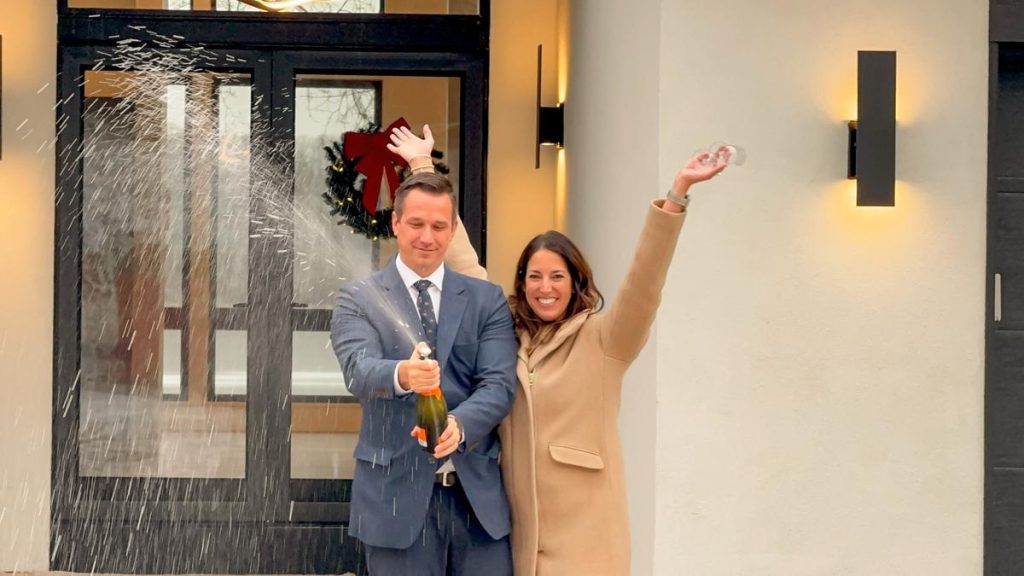
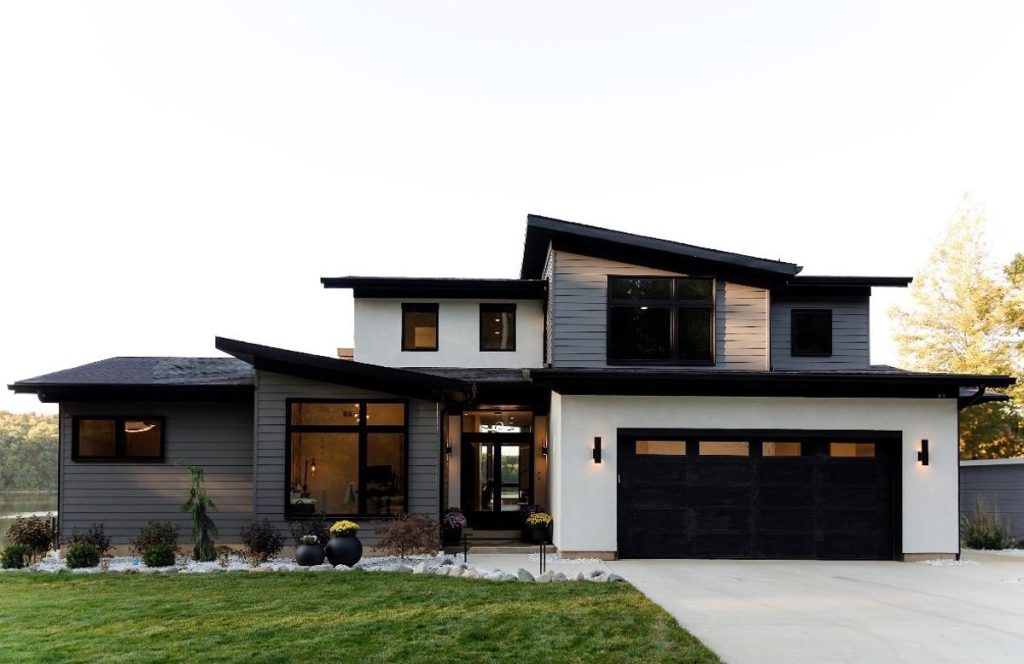
When Catherine and Brandon began working with Riemco on their custom home, they expected conversations about floor plans and window placements. As the process unfolded, they discovered that the experience itself was becoming part of the relationship. “Riemco has been incredibly collaborative at every phase,” Catherine recalls. “They’ve been with us, providing great ideas, feedback, and input. They have a really clear process, and we felt supported the entire time.”
“We ask our clients to trust us with one of the largest investments they will ever make. Our approach is critical for all that will be asked of them and for the building blocks of our process to be successful. We have centered our entire process around implementing a positive client experience because our clients deserve that,” states Maria Riemenschneider.
When Structure Creates Freedom
Sometimes, clients have been dreaming of a custom home for decades. They’ve imagined every room, saved pictures of their favorite styles, considered each detail, down to paint colors and drawer pulls. Others come with just a feeling, a sense they will know it when they see it.
Discovery begins with listening. The team learns who clients are, how they live, and what’s most important to their lifestyle. They ask questions and listen intently. Priorities are defined. Trust continues to strengthen.
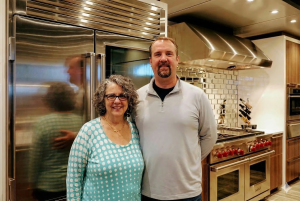
For Katy and Andy Kellogg, Riemco had to navigate complex zoning challenges. “We had a tall order,” Andy says. “I don’t know if Riemco understood at first the challenges that might be presented to them, but I’m confident to say they’re the only people around who could handle what we were looking to do.”
The architectural design phase is where concepts become layouts. Katy remembers this phase clearly. “I was super excited about Riemco’s design process and the designs they did, right out of the gate. I didn’t really want to influence their expertise. So I put together a list of components we wanted and some visions of the style I like.”
The designs that came back sparked conversations. One tool that helped: a scoring template that asked the Kelloggs to prioritize seemingly unrelated items. Walk-in closet versus fireplace. Extra bedroom square footage versus heated floors. The exercise clarified what mattered most when trade-offs emerged. “It really helped us prioritize,” Andy says. “And it sparked different conversations we typically wouldn’t have had.”
The Work Between the Lines
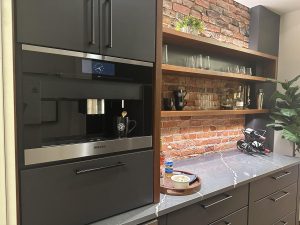
As the architectural design is solidified into a preliminary layout, design development continues with decisions and selections for every detail: cabinetry, countertops, tile, finishes, and fixtures. Riemco’s project designers guide clients through these choices in structured meetings, tackling one thing at a time so no one is overwhelmed.
“Jessica was our project designer, and it was so well organized,” Katy explains. “I don’t remember the exact cadence, but it was like week one cabinets, week two windows, week three tile, week four was the fireplace. I remember being so nervous about tile—I was thinking, “This is going to be so many big decisions.” It was a breeze. We walked in, looked around, and said, “Oh, I love this.” Jessica said, ”Okay, this would be great for this room, and why don’t we add these three things to it?” It was that easy. Jessica told us we could leave while she stayed back to do all the measurements and ordering. So, it was just hands-off for us; we were involved in all the key decisions, but we didn’t have to do all the nitty-gritty work, which made it super easy.”
Behind the scenes, Riemco coordinates with trade partners to gather input and real-time quotes, building accurate fixed cost contracts that eliminate surprises later.
Pam Adams, lighting specialist at Gross Electric, has worked with Riemco for over two decades. “The nice thing about working with Riemco is they have their game plan already on,” she says. “By the time I’m talking with most of their clients, they already know what they want, and they have a list of what they need.”
Rochelle Mueller, hardware specialist at Gross Electric, receives cabinet drawings and door schedules ahead of client meetings. “That way, when the client comes in, it’s really just making those selections,” she explains. “Riemco is very prepared and ready to go with their clients.”
That preparation—the organized meetings, the drawings prepared and sent ahead, the behind-the-scenes coordination—is what allows clients to focus on the decisions without becoming overwhelmed.
Before Ground Breaks
Pre-construction marks a transition. Construction drawings and specifications get finalized. The construction timeline integrates trade partners and material orders. The specifications documented with hundreds of decisions compiled is printed and reviewed with the client, one final time before approval.
Now it’s time for the hand-off. Planning and design shift to construction management, and Ron Devine becomes the primary contact. Ron has managed every Riemco project for the past 28 years. While he meets clients a few times during design to answer questions, at this transition, his focus is on building trust.
“I have to build their trust, Ron explains. I want my cadence to be consistent with every client. That trust gets built through consistency, transparency, and flexibility. Some clients want frequent communication. Others prefer minimal contact. Some want to be very involved. Others want to step back and let Riemco handle everything. You just see it in the client; they don’t have to say it. It’s just how they communicate or how they act. Once you’ve built their trust, you have to maintain it. If they need me, I want them to reach out. Just know that I’m your guy and I’m in your corner.”
That reassurance comes with realistic expectations, and Ron addresses this directly. “What I don’t want to do before a project starts is paint this picture that everything’s going to be perfect,” he says. “It’s just not realistic. There are going to be challenges. Just know that we’re going to handle it for you.”
The philosophy is simple: take the stress, leave the joy. “We encourage them to watch the progress, to come see what’s happening,” Ron says. “We want them to enjoy the process. We’re going to do the stressing for them.”
When Challenges Arrive
Construction always brings the unexpected. Brandon would stop by the build after work and occasionally notice something concerning.
“Every morning, Ron would get a text from me about ‘Hey, I noticed this…'” Brandon recalls. “And he’s super patient, and every time he said, ‘Yeah, I saw that, and we noted it, we’re on it.'”
After a while, Brandon stopped texting. “Now I’m to the point where I go in the house, if I see something, I don’t even say anything because I’ll come back the next night or a week later and it’s fixed. Talking with Ron, he just wants to make the process as enjoyable and smooth for us. That’s their priority.”
Communication during construction extends beyond problem-solving. Katy appreciated the daily rhythm of updates during her build. “Over the months that the project was running, I would always get a text in the morning from Ron if the guys weren’t coming that day. I was always informed. I was always kept in the loop about why there was a delay or why something wasn’t on track. I really appreciated that.”
Ron has an approach to challenges: identify the issue, develop solutions, and present options. Never just problems. The entire Riemco Team works on each client’s behalf from start to finish.
“When things come up, we’re not trying to hide them,” he explains. “Here’s what we found. It’s already solved. It wasn’t what we were expecting, however, here’s what we’re going to do.’”
Catherine experienced this firsthand. “There has never once been a time when anyone at Riemco has said, ‘Here’s what’s happened. What do you want to do?’ and just left it to us to figure out,” she says. “They don’t come to us unless they have alternative solutions.”
The Details That Become Daily Life
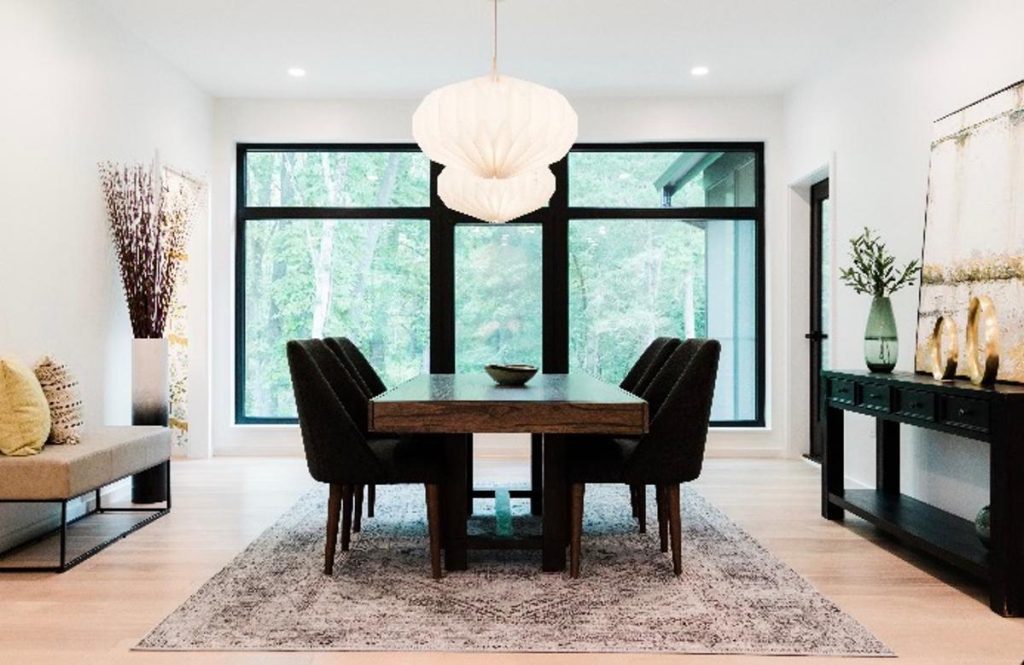
Some of the most appreciated elements emerge during construction itself. The electrical walkthrough, for instance, happens once framing is complete—not during initial design.
“I was trying to figure out why we weren’t picking out electrical and lighting earlier,” Katy remembers. “And then we did the electrical walkthrough, and I knew why that was the exact right choice. Being able to actually walk through the house and envision where we want lights—it was just trusting the process. Riemco’s thoughtful approach is like they’re not trying to get everything done in one go.”
The electrician who walked them through became another advocate, suggesting options they hadn’t considered. Door jamb lighting became one of their favorite details.
The small suggestions accumulate. “The biggest joys that we get out of our house are the tiny things that we would never have thought of through the design process,” Katy says. “Little things like jamb switches on all the closets. You open the closet, the light turns on. You close it, it turns off.”
Andy sees these details as part of a larger pattern—attention to both immediate design and long-term functionality. “Suggestions like ‘You should overdo your electrical panels, you should overdo your insulation,’ because things typically get bigger as you finish the basement or do other things. You don’t want to be asking the house for more.”
Beyond the Build
Once construction completes, the relationship continues through warranty. Jim Antrup, Riemco’s Warranty Manager, schedules 60-day and one-year warranty follow-ups.
“Jim, through the warranty process, has been so proactive,” Katy notes. “I don’t even think about things. He even came out and said, ‘We’re fixing all these things.’ He’s pointing out things that we weren’t even going to call out. He said, ‘You’ve got a year under warranty, and we’re going to make sure everything’s perfect.”
The daily rhythm of construction shifts, but the relationship doesn’t end. “We miss them,” Catherine admits. “The hardest part of the whole thing was at the end, not talking to Ron every day.”
Ron feels it too. “You really do get those relationships built, and then you miss the client,” he says. After 28 years and hundreds of projects, that connection still matters.
What Makes It Work
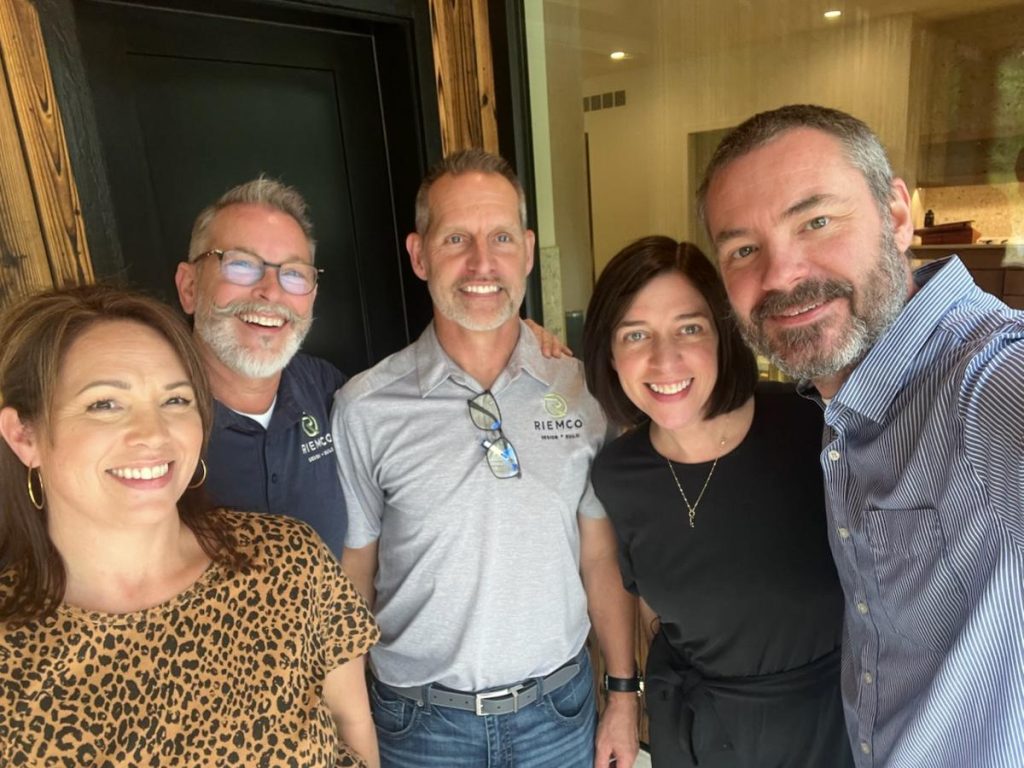
The process Riemco follows— from initial discovery through warranty—provides a framework for building homes and relationships.
When discovery sessions ask about priorities, the team is learning how to adapt to each client. During both Architectural Design and Design Development, a structured cadence of meetings creates space for decisions without overwhelm. When Ron walks a site daily, he’s maintaining the schedule through relationships with every trade partner.
“There’s one thing creating a schedule, there’s another thing of maintaining that schedule,” Ron says. “You must have all those relationships and all those pieces and parts to make it happen. When I need a favor, they’ll do it. And when they need a favor, I’ll do it. That all just molds together and works.”
What distinguishes the work isn’t the framework itself, but what happens inside it: the questions asked during discovery, the preparation done before meetings, the transparency when challenges emerge, the follow-through after completion. Riemco cares deeply about each client and each project; the work is personal.
Catherine experienced this throughout the build. “We knew what to prepare for each time we met, and we never had to lead the process. Riemco would hear what we said, and then translate it, coming back with their ideas for design or their ideas to solve a problem.”
That translation—from what clients envision to what gets built—happens through hundreds of small moments of listening, preparing, and following through. It’s the sweet spot where structured process meets genuine partnership.