How Well-Organized Coffee Bars Are Brewing a Better New Year
Over the past few years, one of the most frequently requested home updates has been the addition of a dedicated coffee or beverage area, a design choice expected to carry into 2026 and beyond. Rather than a sweeping renovation, these spaces represent a simple but meaningful improvement to daily life. When thoughtfully designed, a coffee bar reflects personal routines, aesthetic preferences, and underlying values.
At its best, a well-designed coffee bar supports an intentional pause. A moment of ease in the morning, a quiet decompression ritual in the evening, or a welcoming gesture when guests arrive. The popularity of dedicated beverage areas lies in how seamlessly they integrate into the individual’s everyday routines and …
Designed Around Daily Life
While kitchens remain the most common location for a beverage bar, the most successful placements are shaped by how people live. Location, scale, and material choices are guided by daily patterns, architectural context, and personal priorities.
Increasingly, sustainability is part of this conversation. Homeowners are selecting eco-conscious materials, energy-efficient appliances, and durable finishes that support long-term use. These choices help ensure that the space remains relevant and functional over time.
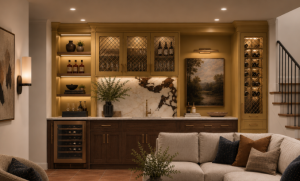
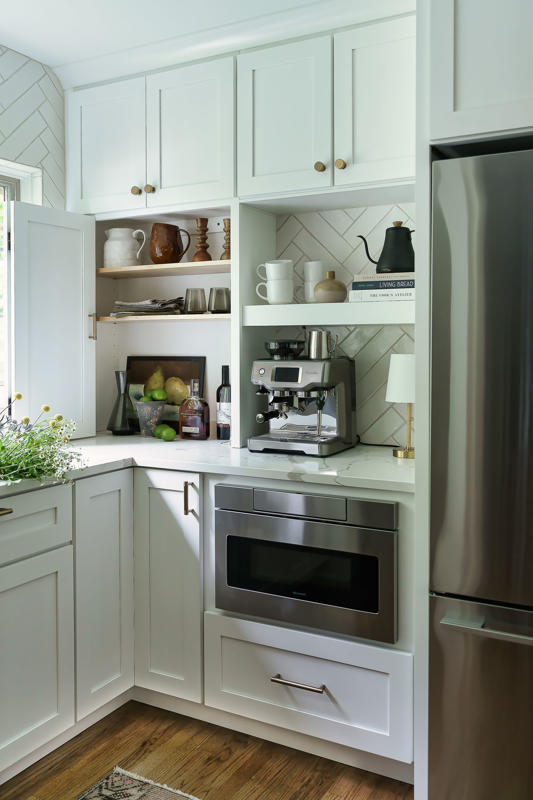
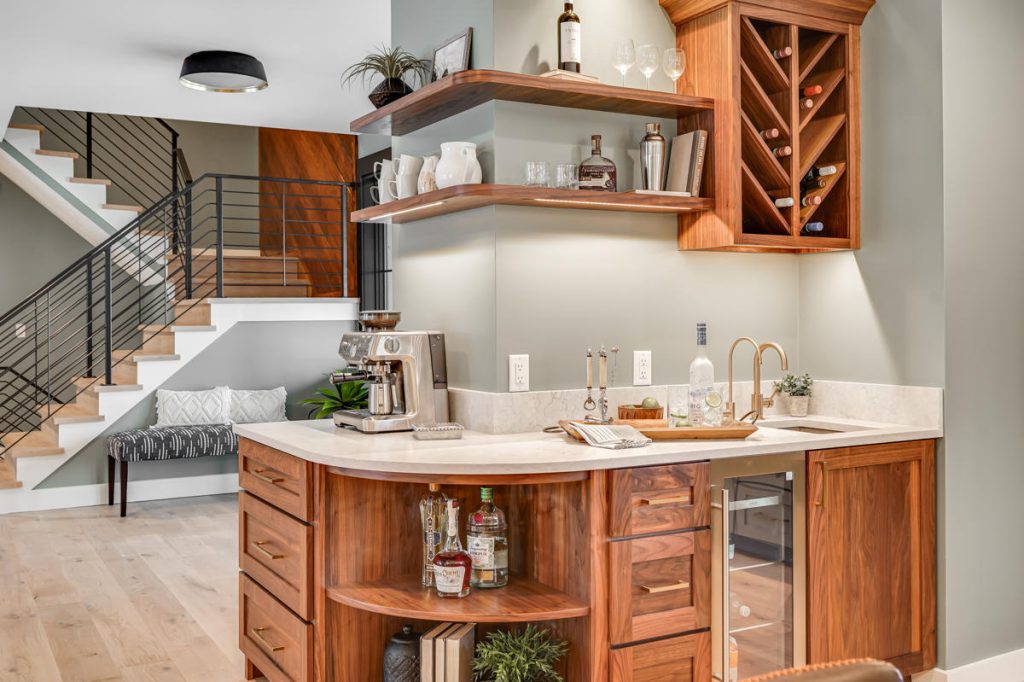
Beverage areas now appear throughout the home. Kitchen pantries and built-in cabinetry continue to offer concealment and efficiency, while butler’s pantries positioned between kitchen and dining spaces are especially well suited for entertaining. Unique placements – under stairways, hallway niches, and arched alcoves are being thoughtfully repurposed, particularly in older homes with existing architectural character. In smaller or urban residences, corner installations and wall-mounted shelving provide refined solutions without requiring additional square footage. Primary suites are also emerging as a preferred location, supporting unhurried morning routines and quiet evening wind-downs without a trip to the kitchen.
Across all of these settings, successful designs begin with personalization.
Considerations That Shape a Personal Coffee Bar
Personal routines form the foundation of the design. How the space is used throughout the day influences everything from appliance selection to storage configuration. Morning espresso preparation, afternoon tea, and evening beverage service each place different demands on a space, and well-designed coffee bars accommodate these rhythms.
Aesthetic preferences reflect the style of the homeowners. Some are drawn to warm, café-inspired environments with layered lighting, or natural textures, or subtle vintage references. Others prefer clean lines and restrained palettes that blend seamlessly into surrounding architecture. Proportion, material selection, and lighting work together to create a space that feels cohesive with style.
Underlying values add depth. Choices around sustainability, craftsmanship, and energy efficiency increasingly guide decisions, from responsibly sourced materials to appliance performance. These considerations help ensure the space feels aligned with a homeowners lifestyle choices.
From Appliances to Finishing Touches
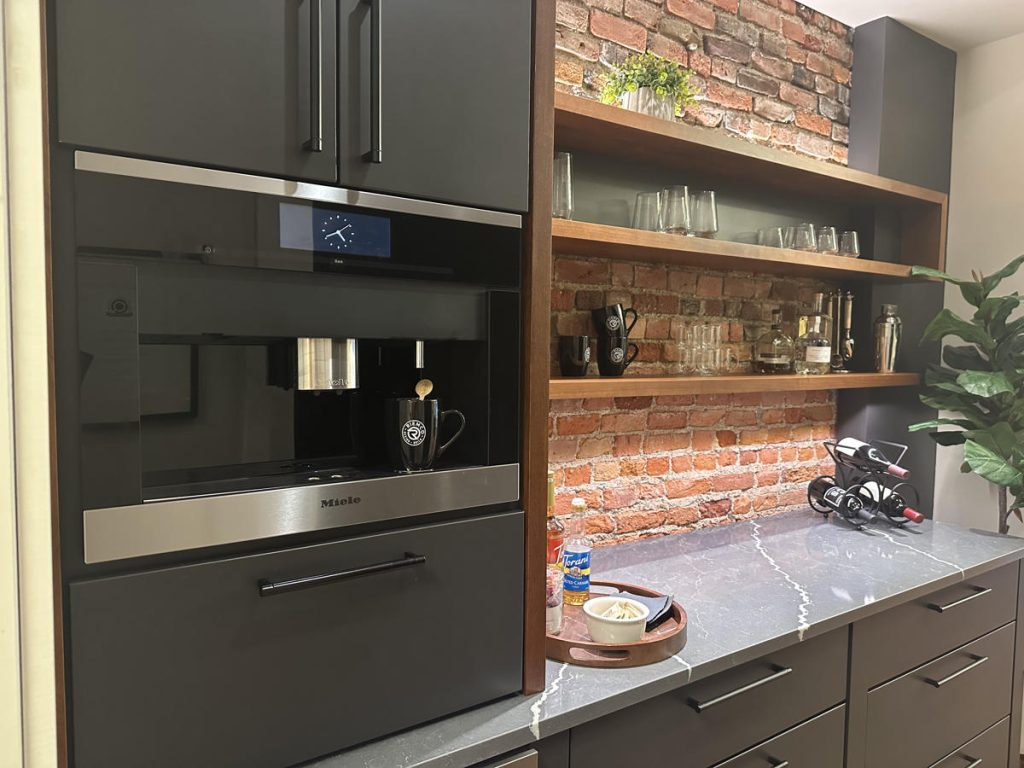
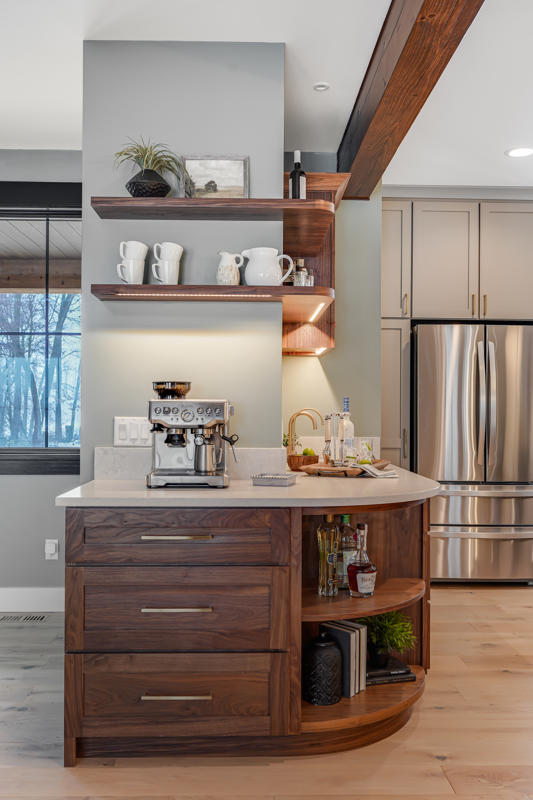
A thoughtfully designed beverage area balances form and function in equal measure. Appliances are selected to support daily use and often include espresso machines, coffee grinders, filtered water taps, and under-counter refrigerators. These elements are often integrated into custom cabinetry, combining open shelving for display with closed storage that maintains visual calm.
Materials, finishes, and lighting are both intentional and decorative, allowing the space to function smoothly and contribute to an atmosphere that feels composed.
A Small Space With Lasting Impact
Coffee and beverage bars may occupy a modest footprint, but their impact on daily life is significant. When designed around personal routines, aesthetic preferences, and long-term values, they become spaces that are well-used and quietly appreciated. They bring structure to everyday rituals, invite moments of pause, and adapt gracefully as needs evolve.
As residential design continues to emphasize personalization and thoughtful use of space, these carefully considered areas are likely to stand the test of time. Not as a luxury, but as a well-designed reflection of how people live, day after day.